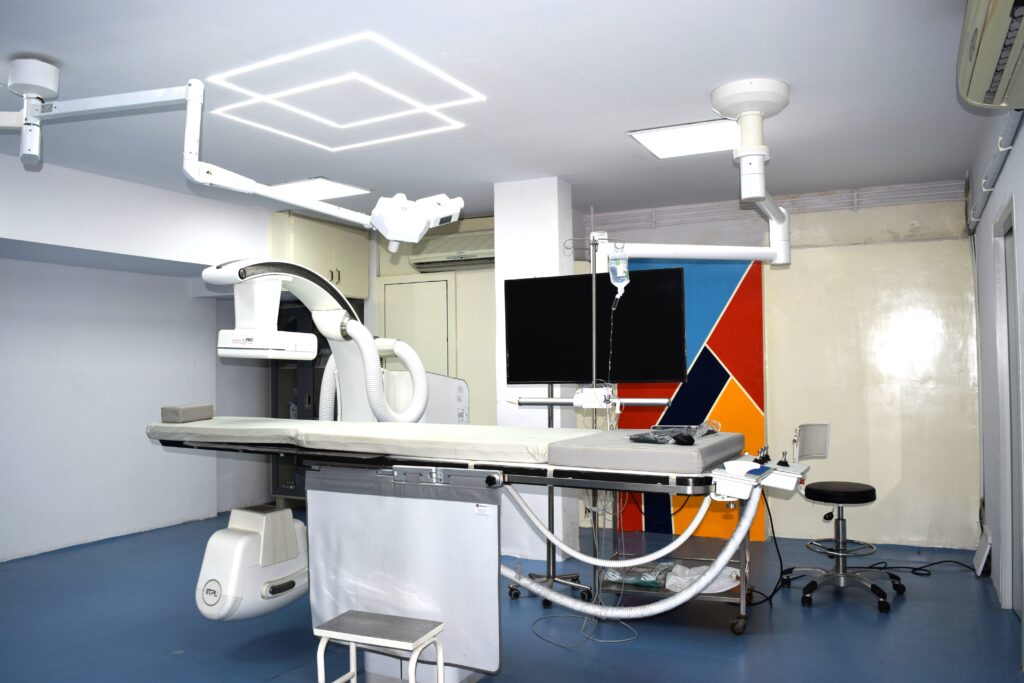
Cath Lab (Cardiac Catheterization Laboratory)
Cath Lab (Cardiac Catheterization Laboratory): It is an Advanced Heart Care without Major Surgery Modern cardiology have made it possible to diagnose and treat many heart conditions using minimally invasive techniques. One of the most important facilities for this is the Cath Lab, short for Cardiac Catheterization Laboratory. A Cath Lab allows doctors to evaluate heart problems and perform life-saving procedures without the need for open-heart surgery.
What is a Cath Lab?
A Cardiac Catheterization Laboratory is a specialized medical facility equipped with advanced imaging technology that helps doctors visualize heart and blood vessels in real time. Using thin, flexible tubes called catheters, doctors can reach the heart through blood vessels in the wrist or groin. High-resolution imaging systems guide the cardiologist to diagnose blockages, measure pressures inside the heart, and perform procedures that restore blood flow.
CONDITIONS DIAGNOSED AND TREATED IN A CATH LAB:
Cath Labs are used to diagnose and treat several cardiovascular conditions, including:
- Coronary artery disease (blockages in heart arteries)
- Heart attacks
- Chest pain (angina)
- Congenital heart defects
- Heart valve disorders
- Peripheral vascular disease
- Abnormal heart rhythms
Early diagnosis through Cath Lab procedures can significantly reduce the risk of serious complications.
COMMON PROCEDURES PERFORMED IN A CATH LAB CORONARY ANGIOGRAPHY:
A diagnostic procedure where contrast dye is injected into the coronary arteries to detect narrowing or blockages.
Angioplasty:
A balloon catheter is used to open blocked arteries and restore blood flow.
Coronary Stent Placement:
A small metal mesh tube called a stent is inserted to keep the artery open after angioplasty.
Pacemaker and Device Implantation:
Devices that regulate abnormal heart rhythms can be implanted using catheter-based techniques.
Electrophysiology Studies:
These procedures help identify the source of abnormal heart rhythms and guide treatment.
Advantages of Cath Lab Procedures:
Cath Lab procedures offer several benefits compared to traditional surgery:
- Minimally invasive
- Smaller puncture instead of large surgical incision
- Shorter hospital stay
- Faster recovery
- Reduced pain and complications
- Quick return to normal activities
These advantages make cath lab treatments an essential part of modern cardiac care.
What to expect during the procedure:
Cath lab procedures are usually performed under local anesthesia with mild sedation. A small puncture is made in the radial artery (wrist) or femoral artery (groin).
A catheter is then carefully guided to the heart using real-time imaging. Contrast dye may be injected to
Visualize the coronary arteries.
The procedure typically lasts 30 minutes to one hour, depending on the complexity.
Recovery after the procedure after the procedure, patients are monitored in a recovery area for several hours. If the wrist approach is used, patients can sit up and walk earlier.
If the groin approach is used, a short period of bed rest may be required. Patient are encouraged to drink fluids to help eliminate the contrast dye from the body. Most patients can return home the same day or the following day.
Safety and risks:
Cath lab procedures are generally very safe when performed by experienced cardiologists. However, like any medical procedure, there are small risks,
Including:
Bleeding or bruising at the catheter site
Allergic reaction to contrast dye
Irregular heartbeat
Blood vessel injury
Infection (rare)
Your medical team will take all necessary precautions to minimize these risks.
Importance of early cardiac evaluation:
Heart disease remains one of the leading causes of illness worldwide. Timely evaluation using cath lab technology allows doctors to detect problems early and provide effective treatment.
Early intervention can prevent serious complications such as heart attacks, heart failure, and sudden cardiac events.
Conclusion:
A cath lab plays a crucial role in modern cardiology by enabling precise diagnosis and minimally invasive treatment of heart diseases. With advanced imaging, skilled specialists, and cutting-edge technology, cath labs have transformed the way cardiac conditions are managed, offering patients safer procedures and faster recovery.